Jewelry Casting Manufacture Services
Jewelry casting allows designers and jewelry stores to create beautiful jewelry. When using the jewelry casting process, the designers and jewelry stores will submit a design. The design, which can be completely new or from a pre-existing item, is used to make a mold. This will eventually be used to create a physical reproduction of the desired piece.
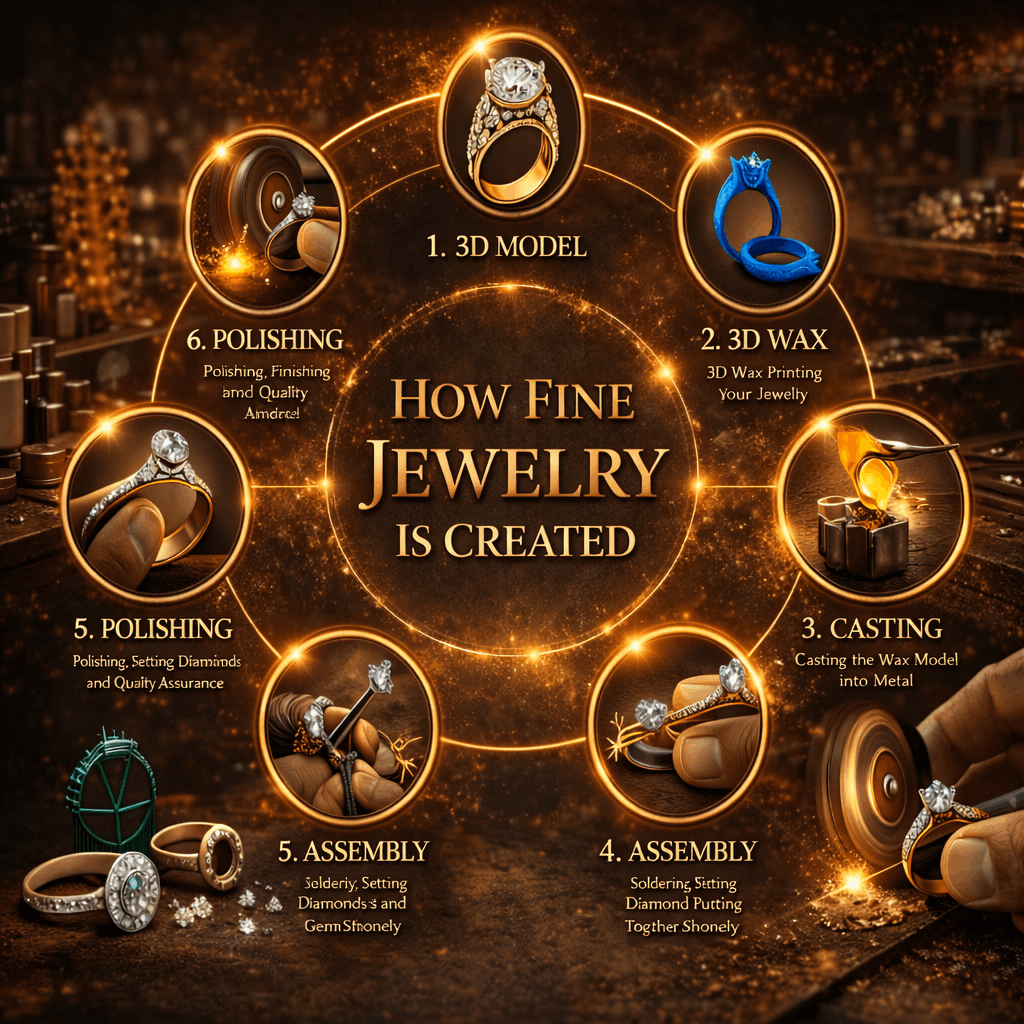
The jewelry casting process involves the following steps:
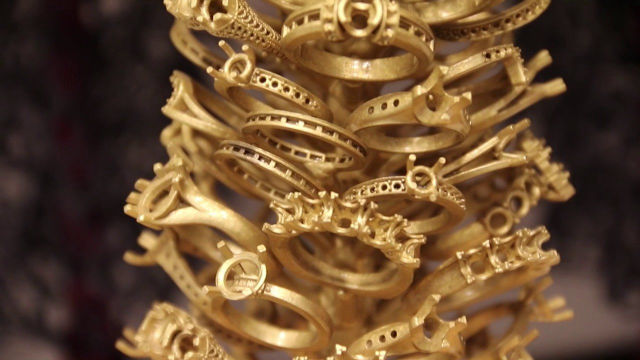
Wax model and casting preparation. Wax models are carved or printed to represent what the finished pieces will look like, and they are attached to a wax stem by sprues that will form the channels through which the molten metal will flow.
Investment. The wax models and stem are placed in a flask and surrounded by an investment material that will harden into the mold.
Burnout. Once the investment material sets, the flash is placed into a kiln to burn away the wax. When all of the wax is burned away, it leaves a cavity in the investment material that becomes the final mold.
Melting. The metal is melted at very high temperatures, and the temperature depends on the alloy being used.
Casting. Although liquid metal can be simply poured into a mold, different techniques provide higher-quality castings by controlling the flow of metal into the mold. Centrifugal casting, vacuum-assisted casting or pressure casting can be used to ensure the liquid metal is spread evenly throughout the entire mold. Casting House utilizes all three of these methods as well as torch casting, which utilizes a torch to melt a very small amount of metal that is poured into a mold.
Divesting. Once the metal cools, the casting is removed from the investment either by physical or chemical means. The sprue on each piece is cut off and the ring castings are cleaned up to remove any imperfections.